In the 1970s, while studying architecture at Pratt Institute, I regularly attended public lectures and debates hosted by the Architecture League of New York. These gatherings drew students and young practitioners who sensed that architecture had entered a period of uncertainty. Modernism’s authority was fading, yet no clear successor had emerged. What made these evenings compelling was not allegiance to a particular camp, but the shared recognition that the discipline itself was searching for direction.
At the time, the urgency of these debates was palpable. They were crowded, animated, and often contentious. Yet participants returned repeatedly, driven by the sense that the stakes extended beyond stylistic preference. Architecture, as both cultural practice and professional discipline, was being renegotiated in real time.
A Profession in Search of Orientation
By the early 1970s, modernism had largely exhausted its cultural authority. What followed was not a unified movement, but a vacuum of consensus. Architectural education reflected this condition. At Pratt, the absence of a dean was emblematic of broader institutional uncertainty.
Despite this instability, or perhaps because of it, a strong sense of intellectual community emerged among those attending public forums. Disagreement did not fracture the audience; it animated it. The Architecture League became one of the few spaces where architecture retained enough cultural gravity to warrant sustained public debate.
The Architecture League as Intellectual Infrastructure
By mid-decade, the Architecture League functioned as more than a professional organization. It operated as a civic forum for architectural ideas, providing a platform where theoretical positions could be articulated, challenged, and refined beyond the constraints of academic departments or commercial practice.
The debates staged there were not abstract exercises. They were framed by a fundamental question: what, precisely, was architecture becoming? Out of this environment emerged the loose but influential division that came to be known as the Whites and the Greys.
The Architecture League as a Battleground of Ideas
Although the Whites and Greys are often discussed as theoretical categories, their confrontation was grounded in institutional activity. The Architecture League played a central role by sponsoring exhibitions and lectures associated with the New York Five, thereby amplifying late-modernist formalism, while simultaneously hosting voices aligned with postmodern and contextualist critiques.
Figures such as Robert Venturi and Denise Scott Brown challenged the premise that architecture could operate as a closed formal system. Their arguments emphasized complexity, symbolism, and cultural communication, directly opposing the abstraction and autonomy championed by the Whites.
What distinguished these exchanges was their public character. They were not insulated academic conversations. Students, critics, and practitioners shared the same room, witnessing a discipline openly negotiating its future. The divide between universal modernism and pluralistic contextualism became one of the defining intellectual tensions of late twentieth-century architecture.
Sidebar: What Were the “Whites” and the “Greys”?
During the 1970s, American architecture became polarized around two competing approaches to post-modernist conditions.
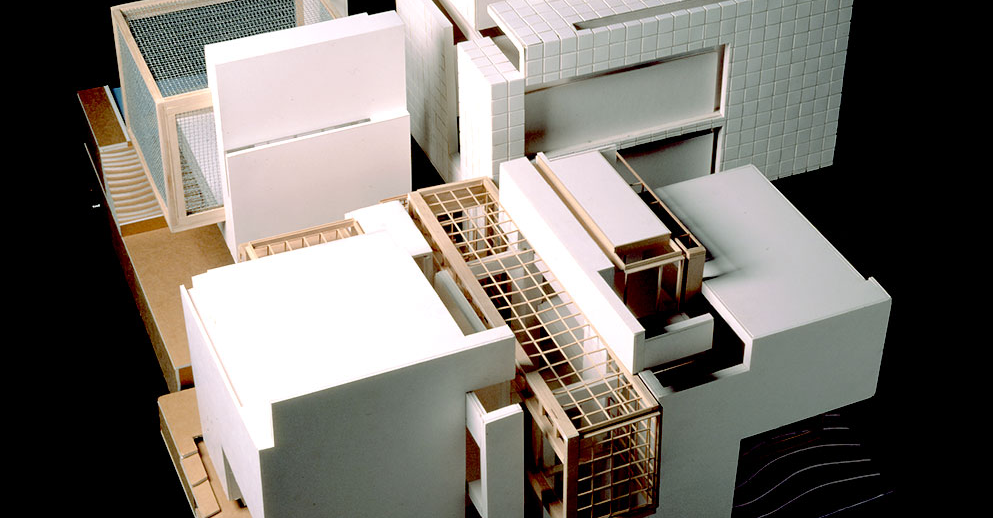
The Whites were associated with late modernism and formal abstraction, most visibly represented by the New York Five: Peter Eisenman, Michael Graves, Charles Gwathmey, John Hejduk, and Richard Meier. Their work emphasized architectural autonomy, internal formal logic, and disciplinary purity.
The Greys advanced a contrasting position. They argued that architecture could not be separated from cultural context, historical reference, or urban legibility. For them, buildings were inherently communicative and civic.
Though never formally codified, this division shaped architectural education, publishing, and professional practice for decades, and continues to inform contemporary debates about design methodology and cultural responsibility.
The Whites: Autonomy and Formal Discipline
The Whites’ position rested on the conviction that architecture should be understood primarily as an internal system of formal relationships. Meaning that, in this framework, the image emerged through geometry, structure, and spatial composition rather than through historical narrative or symbolism.
As a student, I found this position intellectually compelling. It offered rigor during a period of disciplinary instability. It suggested that architecture could preserve coherence through formal logic even when cultural consensus was fragmented.
What became clear over time, however, was that conceptual clarity alone does not guarantee institutional longevity. Architecture does not exist solely in drawings or discourse. It must persist within economic, political, and social realities.
The Greys: Context, Memory, and Public Meaning
Opposing the Whites were architects such as Robert A. M. Stern, whose work advanced a corrective rather than a rejection of modernism. The Greys argued that architecture had become disconnected from the public realm and from the cultural environments it served. Others who joined Stern and the Grey’s included Robert Venturi, Denise Scott Brown, Charles Moore, and Allan Greenberg.
For this group, architecture was fundamentally civic. Buildings participated in collective memory, urban continuity, and everyday life. Historical reference was not nostalgia but an acknowledgment of architecture’s social embeddedness.
American Postmodernism emerged from this position not as stylistic imitation, but as an effort to restore legibility, symbolism, and public engagement to architectural practice.
From Education to Practice
By the late 1980s, after founding Consulting For Architects, I encountered these theoretical divisions in a different context: professional placement. Observing firms shaped by both traditions revealed a pattern.
The Whites tended to produce influential theorists, educators, and formal innovators. The Greys more often built enduring institutions — firms capable of adapting to economic cycles and sustaining long-term client relationships.
Stern, in particular, demonstrated an acute understanding of architecture’s institutional dimension. His work suggested that ideas only endure when supported by organizational structures strong enough to carry them forward.
Acknowledging Robert A. M. Stern
With Stern’s passing, it is appropriate to recognize the scope of his influence. Beyond individual buildings, his impact extended to education, publishing, and professional leadership.
He demonstrated that architecture could maintain intellectual seriousness while remaining publicly legible. His career underscored an essential principle: architecture must not only provoke thought — it must survive time, use, and political change.
Why This Debate Still Matters
The tensions animating contemporary architecture — parametric experimentation versus human-scale design, technological efficiency versus cultural meaning, speed versus deliberation — are contemporary expressions of the same underlying conflict.
Understanding the Whites and Greys does not require allegiance to either camp. It requires recognizing that architectural progress emerges through sustained disagreement rather than consensus.
The discipline remains strongest when theory and practice remain in dialogue, when autonomy is balanced by accountability, and when architecture is permitted to operate simultaneously as formal experiment and civic instrument.
The Whites shaped how I learned to think. The Greys shaped how architecture learned to endure.
That distinction remains as relevant today as it was in the crowded lecture halls of the 1970s.
References
Eisenman, Houses of Cards Hejduk, Education of an Architect Stern, Modern Classicism; New York 1900 Venturi, Complexity and Contradiction in Architecture Moore, Body, Memory, and Architecture Oppositions (1973–1984)
David McFadden is the Founder and CEO of Consulting For Architects Inc., a placement and project-consulting firm he founded in 1984 to align architects and interior designers with design practices on a flexible, project-based basis. Trained in architecture, McFadden worked in multiple design offices—both full-time and freelance—before identifying structural inefficiencies in traditional hiring models. His firm pioneered concepts such as flex hiring and full-time freelancing, reshaping how architectural talent is deployed across the profession. McFadden has guided clients and staff through multiple economic cycles, including four major recessions, and continues to advocate for adaptability, professional longevity, and meaningful design work within architectural practice.
In a recent article by the New York Post titled “NYC Landlords Luring Workers to Offices with Fancy Perks,” https://nypost.com/2024/03/20/real-estate/nyc-landlords-luring-workers-to-offices-with-fancy-perks/ the spotlight shines on the enticing perks offered by landlords to attract employees back to the office amidst shifting work dynamics. While these perks may seem appealing for large corporations, the landscape for small businesses, particularly architecture and design firms with fewer than 50 employees, presents different challenges and considerations.
The allure of onsite amenities such as fitness centers, gourmet cafeterias, and communal spaces undoubtedly holds sway for many professionals. However, for smaller firms nestled within NYC’s vibrant architecture and design scene, the feasibility and practicality of such offerings may vary significantly.
In this blog post, we delve into the nuances of office perks through the lens of small architecture and design firms. While acknowledging the allure of these amenities, we explore why the strategies highlighted in the article might not seamlessly translate to the realities faced by smaller businesses.
As advocates for the growth and sustainability of small firms, we’ll examine:
1. Budget Constraints: The financial implications of implementing extravagant perks for firms operating within tighter budgets.
2. Cultural Dynamics: How small firms’ unique culture and ethos influence the appeal and relevance of office perks.
3. Practical Solutions: Alternative strategies tailored to the needs and aspirations of small architecture and design firms, fostering employee engagement and retention without breaking the bank.
By critically analyzing the insights from the article within the context of small business operations, I aim to equip our readers with practical perspectives and actionable strategies to navigate the evolving landscape of workplace amenities. Join us as we unravel the intricacies of office perks and chart a course tailored to the distinct needs of small architecture and design firms in the vibrant ecosystem of NYC.
Small architecture and design firms must carefully consider every expenditure to ensure optimal resource allocation. While the lavish perks mentioned in the article may foster a desirable work environment, they often come with a hefty price tag, directly and in a building that includes these amenities in the rent. Small firms, particularly those in the startup phase or experiencing rapid growth, may need help to justify such expenses. Instead, prioritizing investments in essential resources like cutting-edge design software, professional development opportunities, or collaborative workspaces tailored to the specific needs of architects and designers can yield more tangible benefits within a constrained budget.
The culture of a small architecture or design firm often thrives on intimacy, collaboration, and a shared passion for creativity. Unlike large corporations, where employees may be drawn to onsite amenities as a substitute for a sense of community, small firms typically foster a familial atmosphere where personal connections and shared values reign supreme. As such, the allure of extravagant perks may pale compared to the intrinsic rewards of working closely with like-minded colleagues on stimulating projects that align with one’s design philosophy. Cultivating this unique culture becomes a cornerstone of employee satisfaction and retention, superseding the need for flashy office amenities.
While acknowledging the appeal of office perks, small architecture, and design firms can adopt more pragmatic approaches to enhance the workplace experience for their employees. Emphasizing flexibility in work arrangements, providing opportunities for professional growth and mentorship, and fostering a collaborative work environment where employees feel valued and empowered can significantly impact job satisfaction and retention. Investing in wellness programs, such as yoga classes, mindfulness sessions, or ergonomic workstations, can promote employee well-being without straining the budget. By aligning perks with the values and aspirations of their workforce, small firms can cultivate a vibrant workplace culture that sets them apart in a competitive market.
In conclusion, while the allure of fancy office perks may capture headlines, the reality for small architecture and design firms in NYC paints a different picture. Budget constraints, cultural dynamics, and the need for practical solutions tailored to the unique needs of small businesses necessitate a nuanced approach to enhancing the workplace experience. Small firms can create environments where employees thrive and excel by prioritizing investments that align with their values, fostering community and belonging, and embracing flexibility and innovation. As the work landscape continues to evolve, small architecture and design firms stand poised to lead the way in redefining what constitutes a fulfilling and enriching workplace experience in the dynamic metropolis of New York City.
Architects must have a seat at the table when important civic decisions are made and must play a vital role in crafting public policy solutions that address the most prominent issues facing states and cities. By advocating solutions within the built environment to address issues like school safety, climate change, and affordable housing, architects are at the forefront of solving these critical challenges. The more architects work with state and local elected officials, the greater the positive impact on these and other important issues facing the profession, the business, and our communities.
Building codes & permitting
Up-to-date codes help save lives, improve building performance, and prevent damage from disasters. We work with our industry partners to develop model codes and assist in their adoption.
In 2007, we helped establish the federal 2030 net zero energy goals. Today, we continue to push for ways to achieve meaningful energy conservation. On the state and local levels, we are working with state governments and local communities to reduce energy use in new and existing buildings.
The permit review process can often cause unneeded and costly delays to projects. We provide models that can help reduce delays and advocate for legislation that streamlines the permitting processes.
Professional licensing
Architects are ethically and professionally responsible for protecting the health, safety, and welfare of the public in the built environment. We oppose efforts to weaken rigorous standards for architectural licensing and work to ensure that architectural services are only provided by individuals who have demonstrated competency through examinations, experience, and education.
Architects face encroachment from many individuals looking to carve out a piece of the design business for themselves. We provide resources to defend the value of our profession.
Qualifications-based selection
Would you choose your surgeon based on price alone? Of course not. Unlike procuring discrete products, selecting a skilled professional like an architect requires looking beyond just the price. We support a Qualifications-Based Selection process, which keeps the focus on quality and limits design competitions that force architects to provide services and expertise for free.
Strong, resilient communities
We champion livable communities. Places where it is easy to walk or bike to schools and grocery stores and where there is room for wildlife, culture, and sports. We support transportation and housing policies that repair crumbling infrastructure, revive historic neighborhoods, and create healthier places to live.
We work with communities and elected officials to protect what is unique, and we assist in resiliency planning and disaster recovery to ensure they can rise up again if the worst happens.
Taxes on architectural services
We work to create a business environment that helps firms focus on design. Over the years we’ve defeated tax hikes that hurt architects, pushed for reforms that treat small design firms fairly and worked to create an economic environment that allows members’ firms to grow.
Four in ten firm leaders report seeing an increase in delayed projects at their firm
Architecture firms reported ongoing softness in business conditions to close out 2022, as firm billings declined for the third consecutive month in December. However, the ABI score of 47.5 significantly delayed projects at their firm has been increasing over the last six months, while 30% reported that the share of indefinitely stalled projects has been increasing, and 21% indicated that the share of canceled projects has been increasing.
Overall, firms reported that an average of 13% of the projects at their firm over the past six months have been significantly delayed, 6% have been indefinitely stalled, and 3% have been canceled. Firms with a multifamily residential specialization have been most significantly impacted, as they reported that an average of 18% of their projects have been significantly delayed, in contrast to 15% of projects at firms with a commercial/industrial specialization and 9% of projects at firms with an institutional specialization. Firms located in the Northeast and West regions also reported a higher share of significantly delayed projects than firms in other regions.
As the gig economy continues to grow, so do the number of questions about how the law will be regulated. President Biden’s proposed legislation, the Protecting the Right to Organize (PRO) Act, includes several provisions that could significantly impact gig workers, including freelance architects and interior designers.
The PRO Act would make it easier for gig workers to unionize by clarifying that they are employees, not independent contractors. It would also give them the right to bargain collectively with their employers.
The bill would also make it illegal for companies to misclassify their workers as independent contractors to avoid paying benefits or complying with labor laws, even in cases where the worker is an independent contractor and prefers to work that way.
Working as an independent contractor has many benefits for architects and interior designers. These professionals can enjoy greater control over their work, schedule, and income. Additionally, they are not tied to one company or location and can take on projects that interest them from anywhere in the world. Independent contractors often have more freedom to negotiate fees and choose their working hours. They also typically have lower overhead costs than traditional businesses, which results in higher profits. In addition, they are not subject to the same employment laws and regulations as conventional businesses, giving them more flexibility in operating.
If you believe every worker in America should be the employee of a firm rather than work for themselves, you should support the passage of the PRO Act. If not, there are a few things that architects and interior designers can do to fight the passage of this law. First, they can educate themselves and others about the potential negative impacts of the law. Second, they can contact their local representatives and let them know their concerns. Finally, they can support organizations fighting against the passage of the law. Where do our professional associations stand? Contact the national headquarters of The American Institute of Architects and work with them to develop a strategy. https://www.aia.org/pages/6347502-federal-advocacy-outreach.
ABOUT THE AUTHOR
After working at various design practices on a full-time and freelance basis and starting his design firm, David McFadden saw a gap to fill in the industry. In 1984, he created an expansive hub for architects and hiring firms to sync up, complete projects, and mutually benefit. That hub was Consulting For Architects Inc., which enabled architects to find meaningful design work while freeing hiring firms from tedious hiring-firing cycles. This departure from the traditional, more rigid style of employer-employee relations was just what the industry needed – flexibility and adaption to current work circumstances. David has successfully advised his clients and staff through the trials and tribulations of four recessions – the early ’80s, the early ’90s, the early 2000s, the Great Recession of 2007, and the Pandemic.
December 7, 2021 – Freelancers and Independent Contractors Beware: Build Back Better Vows to Impose the PRO Act Which Threatens Your Livelihood
The freedom to work as a freelancer or independent contractor provides flexibility for households and vibrancy to the American economy. It is tailor-made for architecture and design practices and freelance architects seeking to fill the peaks and valleys standard in architecture practices.
The PRO Act bans Right to Work laws nationwide. Still, it also imposes the same independent contractor/freelancer-destroying policies of California’s AB5 law, which has destroyed countless lives and driven people out of the Golden State.
Freelancers and independent contractors want to be their bosses. AB5 and the PRO Act dictate they must have a boss. Households need greater flexibility than ever after the changes brought about by COVID in the workplace.
I have been fighting my whole professional career for the right to freelance and become an independent contractor. We need to rally the political wing of AIA.org and ask their Advocacy group to engage and lobby against this provision of the Build Back Better bill.
Act Now Contact Sarah Dodge, AIA, Senior Vice-President of Advocacy & Relationships, and ask her to put the full force of the AIA’s advocacy group behind removing the AB5 provision out of Build Back Better!
Successful architecture careers don’t happen by accident. Just like well-designed buildings, they’re the result of careful planning.
While there are countless metrics you can consider when going about this planning, one of the most important is the city within which you’ll work.
That’s why we’ve put together a list of the three best cities in the country for professionals who are serious about pursuing successful architecture careers.
We based this list on the all-important factor of salary but also on other unique traits worth considering.
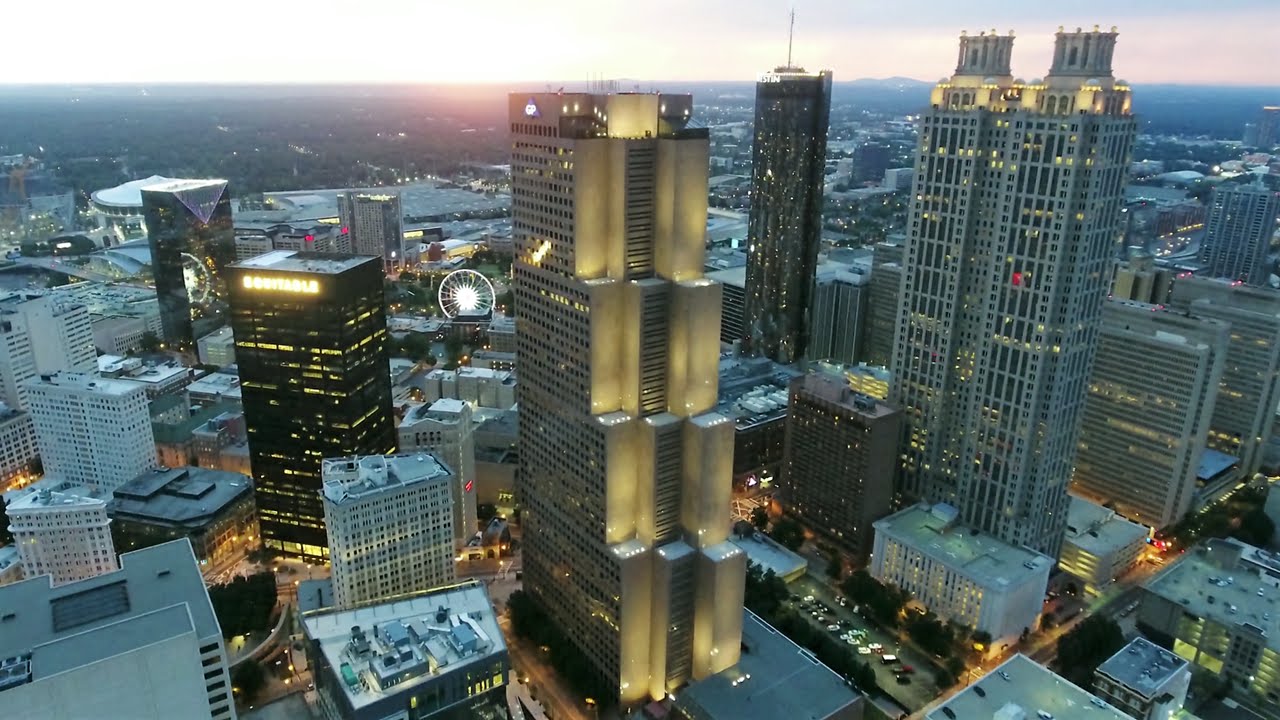
Even though Atlanta is home to countless high-paying careers, architects are among the top 50 best-paid. Architectural managers even crack the top 20, alongside lawyers, several doctors, and even physicists.
Of course, Atlanta also has an impressive history of hosting incredible buildings from a number of different styles, so you won’t be lacking for inspiration. That said, you won’t be lacking for competition, either. Atlanta is home to a few award-winning architects, though that also means plenty of impressive firms looking for new talent.
2. West Palm Beach, Florida
Located about an hour-and-a-half north of Miami, West Palm Beach has plenty going for it aside from the incredible weather. On average, the highest-paid architects in the country call West Palm Beach home. That average salary is an impressive $120,380 a year. Florida does not have a State income tax either.
The city is also full of architecture firms – well over three dozen of them – so you shouldn’t have too much trouble beginning your job search.
For our third spot on the list, we head north to the Windy City. Chicago’s history as a city of architectural wonders probably began in 1893 during the World’s Fair. It debuted the first ever Ferris Wheel but also brought in some of the time’s most prominent architects to contribute their talents.
Modern architects looking to do the same won’t be disappointed. While the pay isn’t as much here, the cost of living is also much lower, meaning your salary will stretch a lot further.
Work with Experts Who Specialize in Launching Architecture Careers
Want more help getting your career off the ground?
At Consulting For Architects, we specialize in both project placement and permanent placement for professionals who are dedicated to pursuing successful architecture careers. If you’d like the help of an experienced team of experts, please feel free to contact us today.
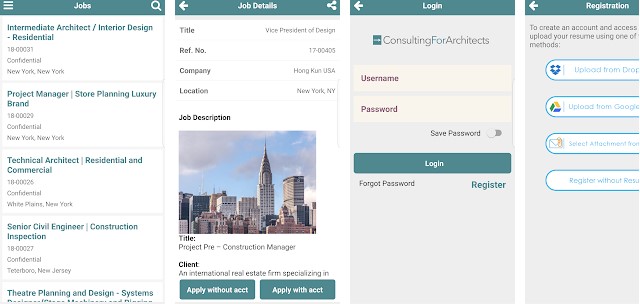
Download our mobile app. The mobile app is the fastest and most enjoyable way to search new job openings in architecture and interior design from the leading staffing and recruiting firm exclusive to the design community. Download appiPhone and Android
1. Install the CFA Job Search mobile app.
2. Create or import your resume
3. Swipe through jobs and apply!
Use this app to apply to jobs, manage your resume and other documents, and more – all directly from your smartphone using our mobile app. With the our mobile app you can:
* Search and apply for open positions. Find jobs and share your resume with only a few taps of your smartphone.
* Track your Applications.
* Store and manage your resumes. Upload your latest resume to the Job Search app and use it to apply for jobs with one tap.
* Fill out, electronically sign and submit On-Boarding documents.
* Submit feedback on Assignments. Communicate with our team without leaving the Job Search app.
CFA is the only placement firm built from scratch by a published designer educated and experienced in architecture. Our search techniques utilize that enhanced insight, which is why job seekers and hiring firms choose our top-tier staffing services.
Visit our Booth on the 1st Floor #4315 June 21-23 New York City – Jacob Javits center
Get ready for three immersive days of what’s new and now in architecture and design, hosted in one of the most iconic cities in the world. At A’18, some of the most creative architects, designers, and firms will share how they’re creating their own blueprint and making a difference in cities of every size all over the world. Find us on google.
An architecture firm is only as good as its people. Here are a few tips for attracting—and retaining—the best in the business.
By Nate Berg
From entry-level interns to top-tier management, the business of architecture relies on smart workers [staff]. To stay competitive and endure an ever-turbulent job market, design firms need to recruit the best and the brightest while holding on to the skilled talent they already have.
Look for Inquisitive Minds When seeking new talent, New York–based Robert A.M. Stern Architects partner Graham Wyatt, AIA, says firms should look broadly at the candidates’ talents. Architectural ability and design skills are obviously important, but they shouldn’t be the only factors considered. “Look for people who are broadly educated and, beyond that, people who are inquisitive about the world, who are not just one-dimensional,” he says.
Incentive High Performance
Rewarding employees based on the quality of their work will push them to excel and make them feel appreciated. Robert A.M. Stern Architects uses a system as part of a profit-sharing model that, when the firm is in the black, issues an additional bonus to employees based on annual reviews. “The principle of it is important to the culture of our firm, which is to reward people at all levels so they feel that they’re pulling in the same direction,” Wyatt says, “and that’s really essential to our success.”
Respond to Shifts in Supply and Demand
The layoffs during the recession may seem like fresh wounds, but the market has recovered. Demand for architects is high now due to increased work and a limited supply of professionals. “Twenty to 30 percent of the architectural workforce left in the last recession, so the talent pool is much smaller,” says David McFadden, CEO of Consulting for Architects, a staffing agency. Firms need to recognize that it’s a seller’s market. “Architects are just not sitting on a department store shelf anymore.”
Evaluate Routinely
Regular performance reviews are crucial for employers to track progress and for workers to get positive feedback, constructive criticism, and, ideally, a chance to request a raise. Communication is mutually beneficial, but it sometimes doesn’t happen enough. “In some firms, the annual review only happens every two or three years,” says Herbert Cannon, president of consultancy AEC Management Solutions. “That can be demoralizing to employees.”
Be Less Picky, Hire More Quickly
A dearth of architects means employers need to adjust expectations and perhaps lower their hiring standards. The perfect candidate simply might not exist. “There’s still this perception that there’s people available that meet all of your criteria. But in fact there’s not and so you need to make a quick attitude adjustment,” says McFadden. To top it off, the limited supply is in such demand—the candidates you want may be under consideration by other firms. McFadden suggests acting quickly: “Shorten the time from receiving a résumé to scheduling an interview to making an offer. … You have to be quick; otherwise you’re going to lose out to a firm that is.”
Honor Loyalty
Firms need to know how to hold on to what they’ve got. That was easier during the recession when many architects were happy to have any job. But now that things have turned around and opportunities are opening up, employers need to do more to keep their workers from perusing the job boards. McFadden says firms should increase compensation for the people who stuck with them during the recession, and even more so for those who saw years pass by without a raise.
*This article was not written for The CFA Blog. This article was written for Architect Magazine.com and reposted by CFA for the CFA Blog.
Editors note: Obviously, we contributed to this article, and agree with the points Nate makes. Do you agree that the hiring trend favors the applicants?