

The Only Referral Registry That Offers Client-Driven Evaluations: Inside CFAeX, the CAD Evaluation Built by CFA
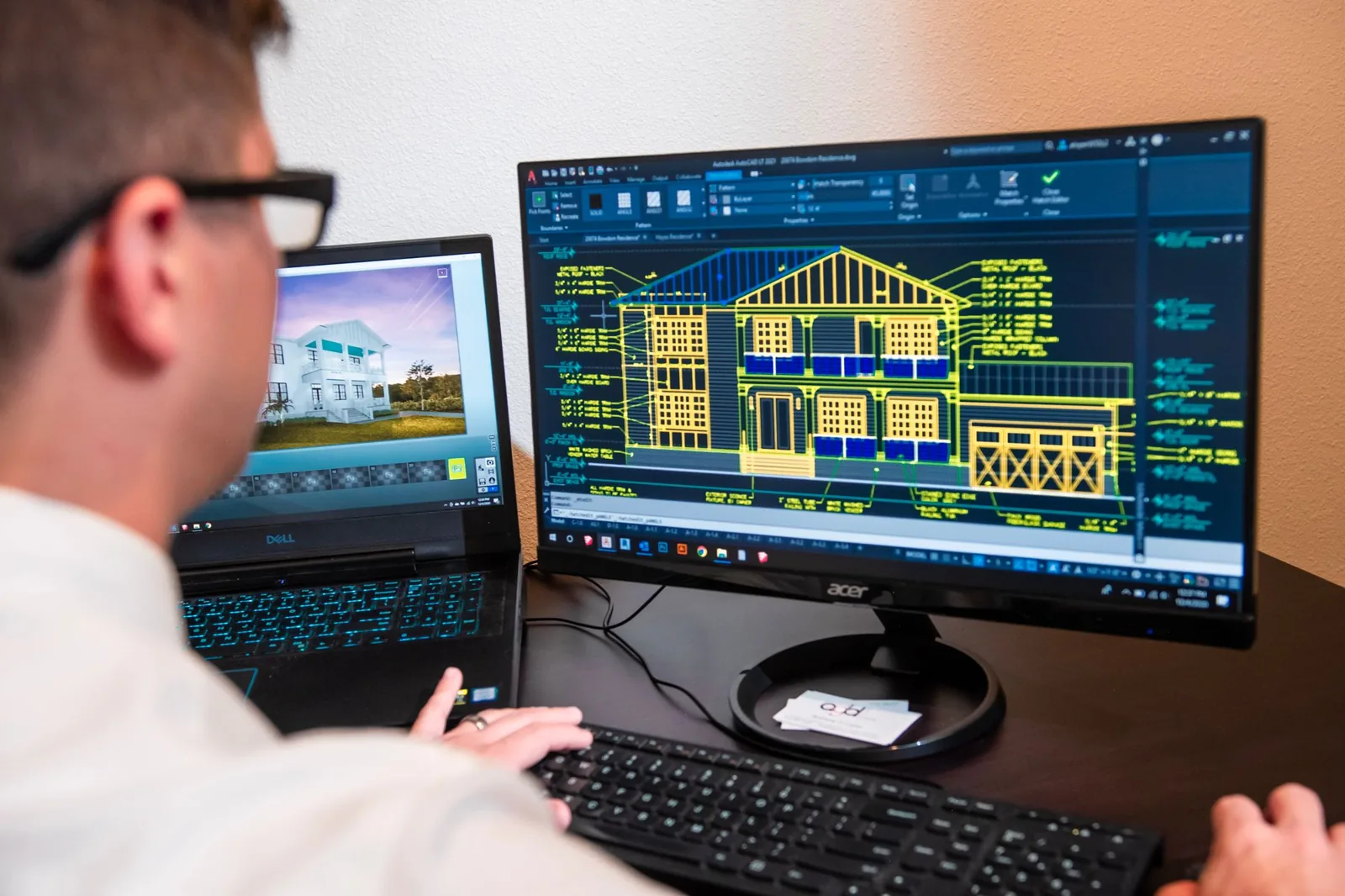
Everyone else who sends you candidates hands you a résumé and asks you to trust the software line. We hand you a score. This is how the CFAeX CAD evaluation works, what it measures, and why we built it in the first place.
Ask most firms that send you candidates how they know a candidate can actually use Revit, and you'll get one of two answers. The first is a shrug: "They said so on their résumé." The second is slightly better: "We asked them some questions on the phone." Neither is a test. Neither is a benchmark. Neither survives contact with a Monday morning at a busy firm where someone has to open a live model, follow a standards manual, pick up redmarks from Friday, and plot correctly by lunch.
Consulting for Architects is the only referral registry in our category that offers client-driven evaluations. We built our own evaluation, we've been refining it since 2002, and we run it on every kind of talent that touches a CAD file — from junior drafters to firm-wide CAD teams whose principals hired us to find out where their real bottlenecks are. It's called CFAeX, short for the CFAeX Knowledge Assessment®. Here's what it is, what it measures, and why the fact that a matchmaker built it — instead of buying one off the shelf — is the whole point.
Why a matchmaker builds a CAD evaluation
There's no shortage of skills-testing platforms. There are vendor certifications from Autodesk. Training schools hand out completion certificates. What none of those things do is answer the actual question a hiring principal is trying to answer: Can this person do the work my firm needs, on my firm's standards, at my firm's pace?
Off-the-shelf tests measure features. Vendor certifications measure vendor knowledge. Both are useful — neither is what firms hire on. So in 2002 we sat down with our own matchmakers, our own hiring firms, and our own candidates, and started writing questions that mapped to how the work actually gets done. The evaluation has grown a lot since then, but the premise hasn't moved: it's an evaluation written by the people who place designers, for the firms that hire them.
That's the unfair advantage. Skills-testing platforms sell tests. Software vendors certify their own products. We match designers with firms for a living — so our evaluations are built around exactly what firms ask for.
What CFAeX measures
The evaluation covers Autodesk's three architectural workhorses: Revit, AutoCAD, and AutoCAD Architecture, on the current 2025 and 2026 releases. Software proficiency is the obvious layer. But roughly a quarter of every evaluation covers something no vendor certification touches, and it's the layer that separates a passable drafter from someone a firm can actually deploy: CAD management.
Concretely, that means:
- Following a firm's layer and line-weight standards, not the software's defaults.
- Sharing a model with a team and coordinating several drafters on one drawing.
- Picking up redmarks from someone else's session without breaking their intent.
- Opening a standards manual and producing sheets that plot correctly, unsupervised.
Those aren't feature-checklist questions. They're the daily practice of production drafting inside a working studio, and they're the reason the evaluation scales from a portfolio-level candidate check up to a firm-wide diagnostic that tells a principal exactly which teams, which offices, and which standards are costing hours.
How the evaluation is built
Every subject area (Revit, AutoCAD, AutoCAD Architecture) draws from a pool of at least 90 authored questions, divided across five categories and three difficulty levels. Each evaluation sitting randomly draws 30 questions — evenly distributed across categories and difficulty — so no two evaluations are ever the same. Two attempts per seat; the best score is kept.
Every question in that pool went through the same process: authored by a qualified content expert, reviewed by at least one second author for objectivity, and approved by an administrator before it ever hits a live evaluation. Questions are screenshot-based and multiple-choice, so what candidates see mirrors what they'd see in the software itself. The evaluation is auto-graded, delivered entirely in a browser (no software to install), and returns results the moment they submit.
Forty minutes. Thirty questions. Three scoring tiers: 70% = certified, 80% = advanced, 90% = distinction. Simple to describe, hard to game — because the question pool changes and the CAD-management questions can't be studied for out of a manual.
Firms evaluate their teams
The version most people meet is the individual evaluation — a candidate chooses to take it, and the score travels with the résumé they share. But the more interesting use case, and the one that grew straight out of the original 2002 product, is firm-wide assessment.
A principal calls us because production feels slow, or because two offices are producing sheets that look like they came from different companies, or because a merger just doubled the drafting team and nobody knows what the combined bench actually looks like. We deploy CFAeX across the whole CAD team — often across multiple offices — and the evaluation does something a manager can't do from a desk: it gives them a per-person, per-category, per-difficulty-level map of where the team is strong and where the hours are getting eaten.
Then we go one step further. Firms can add their own custom categories — questions written on their standards, their office procedures, their plotting conventions — and we'll help author them. That's the piece the off-the-shelf tests literally cannot do, because they don't know your firm. We do, because our matchmakers place inside it.
From score to program
An evaluation that only tells you what's broken isn't worth much. The reason CFAeX has stayed useful for 24 years is that the score gives the hiring firm a clear development path. When the evaluation shows a candidate is 82% on Revit modeling but 61% on drawing management, we don't just report the number — we recommend a targeted program to close the gap, and we refer vetted trainers we've worked with before to run it. When a firm's whole team lands soft in the same category, the same logic scales up: we help the firm scope a program, refer independent trainers the firm engages directly, and re-evaluate in a quarter to show whether the gap closed.
Training isn't a claim we're borrowing. CFA operated an Autodesk Premier Reseller & Training Center for years and was recognized by Autodesk with sixteen national and regional awards between 1998 and 2002 — including the AEC Impact Award, back-to-back listings on the ATC Top National List for Student Enrollment, Individual Instructor and Autodesk, the Autodesk Director's Award for ATC / NY, multiple Outstanding Achievement awards for the Eastern and Central Regions, and President's Club membership in FY '98 and FY '99. That training arm is where the evaluation was born, and the vetted-trainer network we refer into today grew directly out of it.
That's the loop no one else in architecture matching is running: evaluate → diagnose → refer trainers → re-evaluate, on your standards, with talent we already know how to source against the same benchmark. Compare that to the industry default, which is to send you three résumés and hope one sticks.
Every other firm sends you people and hopes they work out. With CFAeX, you can request an evaluation of a candidate before you meet them, evaluate the team they're joining, and close the gap with independent trainers you engage directly. That's why we've kept building the evaluation since 2002 — it's the one part of matching you can actually measure.
For hiring firms: what a CFAeX engagement gets you
The individual seat prices on the product page ($229 AutoCAD, $249 AutoCAD Architecture, $279 Revit) are for one candidate, one release, one evaluation. A firm-wide engagement is a different animal. Firms come to us when they want to know, across an entire studio or across offices, where their real CAD bottlenecks are — and they leave with a plan, not a spreadsheet. Here is what a firm engagement actually includes:
- Baseline benchmark — every seat on your team evaluated on the release you're standardizing on, scored against the same national benchmark we score CFA candidates against.
- Gap report by category — not just a total score, but a breakdown across the five CFAeX categories, so you can see whether the softness is in modeling, drawing management, plotting, standards, or CAD management.
- Custom categories on your standards — firms with proprietary layer standards, sheet-set conventions or family libraries get their own question categories authored under Corporate Author access, so the evaluation covers your office, not a generic average.
- Training plan & vetted trainer referrals — the gap report becomes a scoped training program. We refer trainers we've worked with directly and have benchmarked ourselves.
- Re-evaluation scorecard — in a quarter, we re-evaluate and hand you a before/after that proves the training closed the gap. This is the piece skills-testing platforms cannot deliver, because they don't train.
A CFAeX firm engagement gives you a baseline, a gap report, a training plan your firm owns, built on your office standards, and a re-evaluation that proves it worked. Talk to us about a custom deployment.
The 150-résumé problem
Picture the desk of a hiring director on a Tuesday morning. One-hundred-and-fifty résumés in the pile. Twenty look interviewable. Two are comparable on paper — same years, same firm caliber, same software line. One of them is CFAeX-certified. The other isn't.
Which one do you meet first?
It isn't really a question. Most firms put the certified one on top, because the certification is doing something the résumé can't: independently verifying the software line. Same years on paper, but one candidate's Revit claim has been benchmarked against the same evaluation hundreds of firms hire against — including the CAD-management questions no vendor certification touches. The other candidate might be excellent. You just have no way to know it before the interview.
Multiply that by 150. That's the pile every principal is triaging with limited time — and it's exactly why CFA-placed talent gets to the top of it faster. A certified score is a signal that survives the stack.
Where to go from here
If you're a candidate — take a CFAeX evaluation. It's free for talent in the CFA network, and a certified score travels with your profile straight to the firms we place with. If you're hiring — assess your CAD team, or talk to us about a custom deployment on your standards. And if you want the short read of the product itself — the software list, the score bands, the pricing — the CFAeX product page has it all in one place.
Either way, the point is the same. In a field where "proficient in Revit" means whatever the résumé says it means, CFA is the one referral registry that can prove it — because we're the one who built the evaluation.
Frequently asked questions
What is the CFAeX CAD evaluation?
CFAeX is a proctored, online, client-driven proficiency evaluation in Revit, AutoCAD and AutoCAD Architecture built and maintained by Consulting for Architects. Thirty screenshot-based multiple-choice questions in forty minutes, auto-graded, with two attempts per seat and the best score retained.
Is CFAeX an Autodesk certification?
No. CFAeX is not an Autodesk certification. It is CFA's own credential, benchmarked against how architecture and design firms actually use the software on real project work, not against a vendor feature checklist.
How is CFAeX different from other CAD tests?
Two ways. First, roughly a quarter of every evaluation covers CAD management — following a firm's layer and line-weight standards, sharing a model, picking up redmarks, plotting from a standards manual. Second, CFA is the only referral registry that builds and runs its own CAD evaluation and pairs it with training. Skills-testing platforms sell tests; software vendors certify their own products; we do neither. We match designers with firms for a living, so our evaluations are built around what firms actually ask for.
How much does CFAeX cost?
Free for talent in the CFA network. Retail per release is $279 for Revit, $229 for AutoCAD, and $249 for AutoCAD Architecture. Every seat includes two attempts and the best score is kept. Firm-wide assessments are scoped per engagement.
What score do I need to pass?
Seventy percent earns certification, eighty percent is advanced, and ninety percent is distinction. The evaluation covers the current 2025 and 2026 releases of each application.
Can firms have their whole CAD team evaluated?
Yes. Firms use CFAeX to benchmark their entire CAD team, often across multiple offices, and to identify where standards, throughput or specific software gaps are costing hours. CFA also refers vetted trainers to close the gaps the evaluation surfaces, and firms can add custom categories written on their own office standards.
How does a CFAeX-certified candidate change a hiring director's shortlist?
When two résumés look comparable on paper — same years, same firm caliber, same software line — the CFAeX-certified candidate meets first. The certification independently verifies the software line the résumé is claiming, including the CAD-management skills no vendor certification touches. In a pile of 150 résumés, that's a signal that survives the stack.
#CFAeX #CADExam #RevitCertification #AutoCADCertification #CADManagement #ArchitectureStaffing #ArchitectureStaffingNYC #ArchitectureJobsNYC #ConsultingForArchitects #AutodeskAuthorizedTrainingCenter